Culture and etiquette
What to wear in Dubai and Abu Dhabi: malls, beaches, desert and the Grand Mosque
Light layers that cover shoulders and knees in town, swimwear on the sand only, and a strict dress code at the Grand Mosque. Here is how to pack for every plan and every season.
Published on 13 min readBy High Class Dubai
Key takeaways
- In town, light clothes that cover shoulders and knees are the safe default; skip sheer fabrics and slogans that could offend.
- Swimwear belongs on the beach, by the pool and at water parks. Cover up before walking into a taxi, shop or restaurant.
- At the Sheikh Zayed Grand Mosque, wear loose clothing covering arms and legs; women must also cover their hair.
- Air conditioning indoors is fierce, so a light layer or pashmina earns its place in every bag.
- October to April is mild; May to September calls for breathable linen and cotton, a hat and serious sun protection.
In this article
The one principle that answers most questions
Dubai and Abu Dhabi are among the most international cities in the world, and most residents are expatriates. Nobody expects a visitor to wear a headscarf on the street, and nobody will stop you for wearing shorts in a mall. What locals appreciate is a sense of context: the outfit that works at a beach club is not the outfit for an old souk, a government building or a mosque.
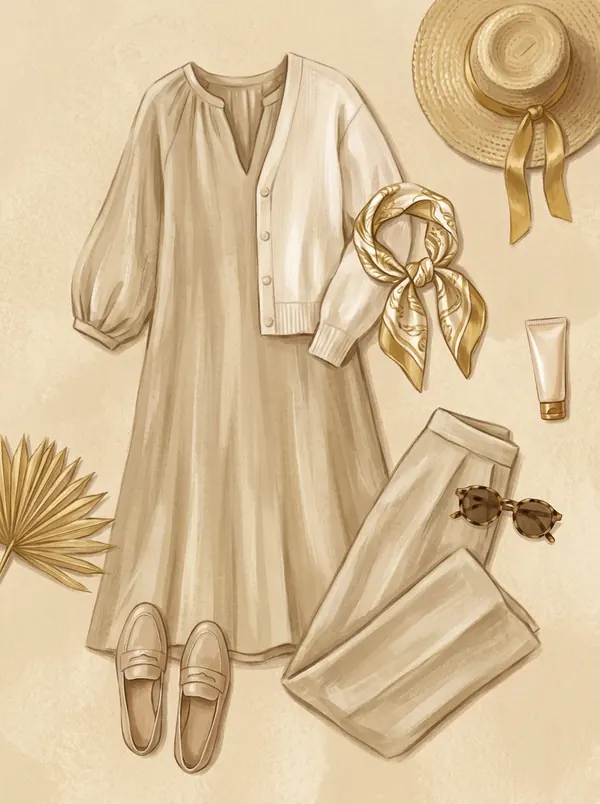
The broad guidance is simple. In public spaces, aim to cover shoulders and knees, avoid see-through fabrics, very low necklines and very tight clothing, and leave behind T-shirts with slogans or images that could be read as offensive. In formal and religious settings, trousers or a long skirt are the safest choice. None of this is complicated, and once you have packed for it you will barely think about it again.
People who live here think in layers rather than outfits. The streets are hot for much of the year, but malls, the Metro, taxis and restaurants run powerful air conditioning. A linen shirt over a vest, a large scarf in your bag or an overshirt you can tie around your waist solves two problems at once: the chill indoors and the extra coverage when your plans change during the day.
It also helps to separate law from etiquette. Topless sunbathing and nudity are prohibited. Covering your shoulders in a mall or wearing trousers to a smart dinner is a matter of courtesy and of reading the room. Follow the rule of beachwear on the beach and city clothes in the city, and you are very unlikely to have any trouble.
Malls, souks and city sightseeing
Dubai's big malls are family spaces, used by Emirati families as much as by tourists. Knee-length shorts, a midi skirt, light trousers, a T-shirt and trainers are perfectly fine. What stands out is very short shorts, gym crop tops worn as streetwear and anything that looks like it came straight from the pool. If you are heading from the hotel pool to an afternoon of shopping, change first.
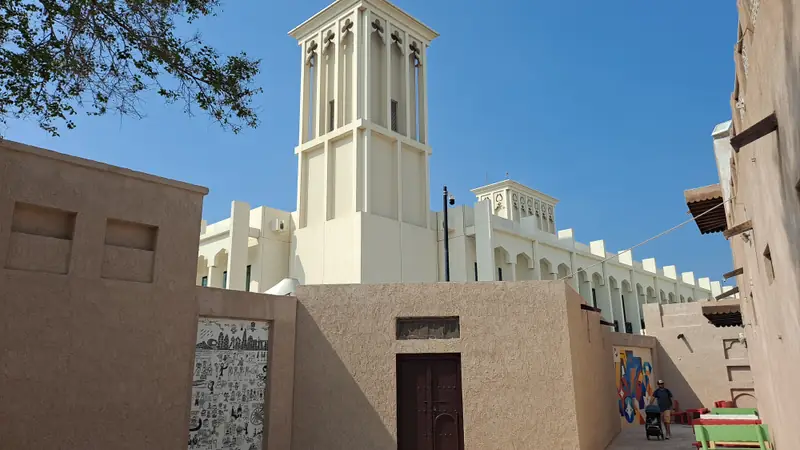
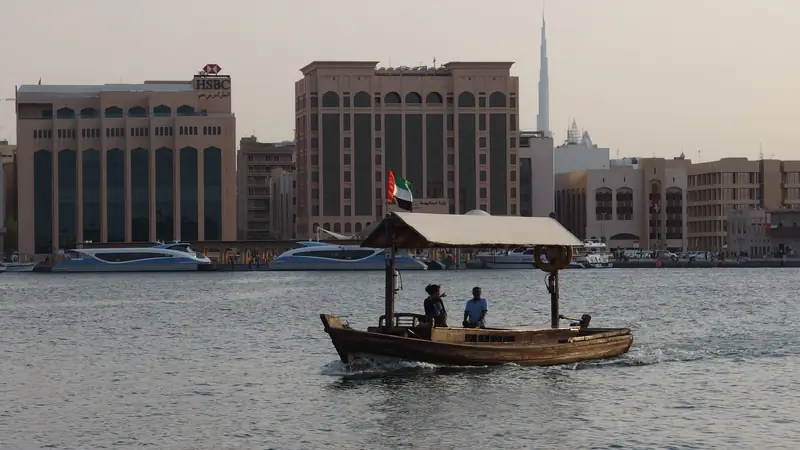
In the historic districts, such as Al Fahidi and the souks along Dubai Creek, the atmosphere is more traditional and the street heat is real. Loose cotton or linen that covers and breathes is the winner here. Comfortable closed shoes matter too: the lanes have uneven paving, and stepping on and off an abra across the Creek needs sure footing.
For men, the same logic applies. Knee-length shorts and a T-shirt are fine for daytime; cut-off vests and bare chests are for the beach. A short-sleeved shirt or polo covers almost every daytime plan without any effort, and it doubles as a smarter option if lunch turns into a nicer restaurant.
| Plan | Safe choice | Best avoided |
|---|---|---|
| Malls and city walks | Light trousers, skirt or shorts to the knee, T-shirt, trainers | Very short shorts, sheer fabrics, swimwear |
| Souks and heritage areas | Loose cotton or linen, comfortable closed shoes | High heels and flimsy flip-flops |
| Metro, taxi and transfers | An extra layer for the air conditioning | Getting into a car still wet from the pool |
| Meetings, trade shows, offices | Light business wear with shoulders covered | Heavy synthetic suits in the heat |
Beaches, pools and water parks
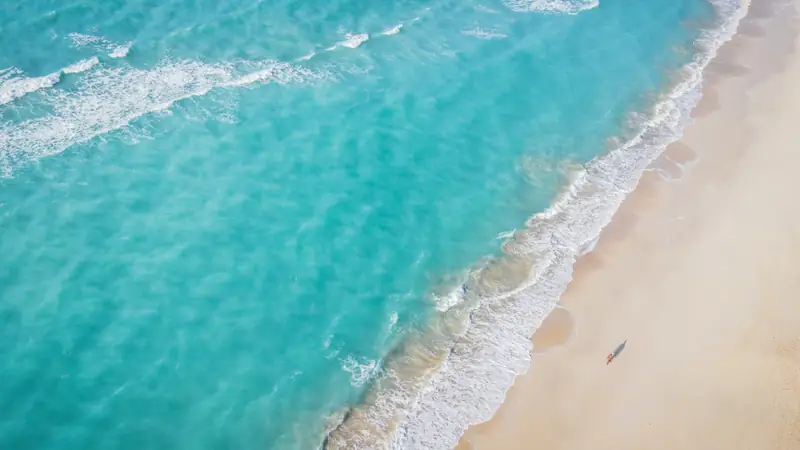
Bikinis, swimsuits, swim shorts and trunks are all accepted on public beaches, hotel beaches, beach clubs, pools and water parks. Topless sunbathing and nudity are not permitted anywhere. On public beaches popular with local families, many visitors opt for a swimsuit or a fuller-cut bikini, which is about comfort and blending in rather than a rule.
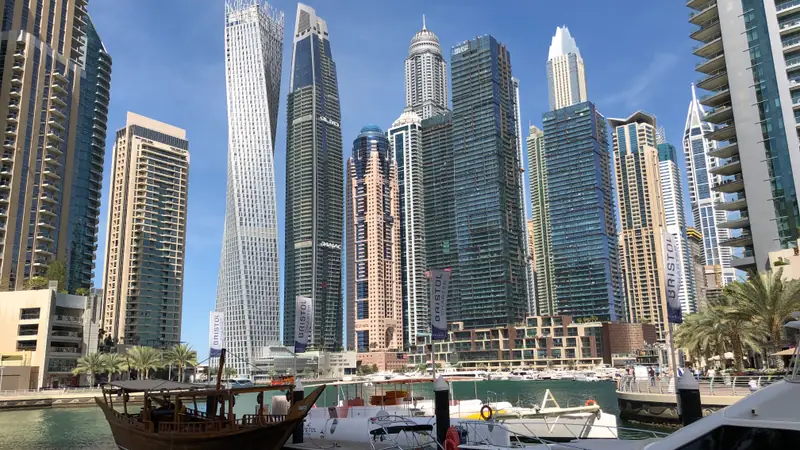
The thing to get right is the transition. When you leave the sand, put on a kaftan, a light dress, a shirt or shorts before stepping into a restaurant, a shop, a taxi or a hotel lobby. Around Dubai Marina and JBR, the beach sits a few steps from a promenade full of cafés, and you can spot the seasoned visitors instantly: nobody crosses the road in swimwear alone.
In Abu Dhabi, the beaches of Saadiyat Island have pale sand and calm water, with a quieter, more family feel. The same logic holds: swimwear on the sand, cover-up off it. Bring flip-flops, because the sand gets very hot from late morning, and a UV swim top for children.
Restaurants, bars and evenings out
Evenings in Dubai are dressier than many first-time visitors expect, closer to a smart London or New York night out than a beach holiday. Hotel restaurants, rooftop bars and lounges usually ask for smart casual: trousers or a skirt, closed shoes or smart sandals, a proper shirt or blouse. Some venues turn away shorts, flip-flops and sleeveless vests for men, even when the restaurant sits inside a beach resort.
For women, a midi or maxi dress, a flowing jumpsuit or tailored lightweight trousers work almost anywhere. Bare shoulders are common in hotel restaurants and bars at night, but bring a pashmina anyway: the air conditioning is strong and your route there may pass through a lobby, a mall or the street.
For men, chinos, a linen shirt and loafers or clean leather trainers take you from dinner to a rooftop. If you have a booking at one of the most sought-after addresses, check the dress code on the venue's website or in the reservation confirmation. The rule belongs to the venue and can be stricter than the city norm.
During Ramadan, the city is noticeably more reserved in the daytime. It is worth being more careful about covering shoulders and knees in public areas and choosing more modest outfits for iftar gatherings, which often bring together families and local hosts.
The desert: safari, dinner and hot-air balloon
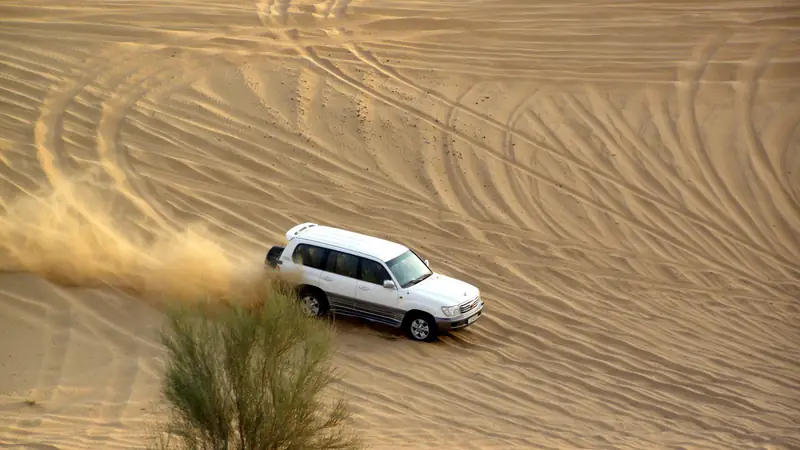
In the desert, practicality beats style. Dune bashing in a 4x4 is bumpy, sand gets into everything and the temperature drops noticeably between late afternoon and night, especially in winter. Light, loose trousers or long shorts, a cotton T-shirt, sunglasses and a scarf to keep wind-blown sand off your face and hair make up the basic kit.
On your feet, wear trainers or sturdy sandals; leave heels and delicate strappy sandals at the hotel. Many visitors end up walking barefoot on the dunes, which is lovely at sunset but painful in the full heat of a summer afternoon. Leave jewellery and fragile accessories behind too.
For a sunrise balloon flight or a desert dinner on a winter evening, pack a proper jacket or fleece rather than a thin cardigan. The pre-dawn chill surprises people who only know the desert from photographs. For help choosing the right format, read our desert safari guide.
- Light trousers or long shorts, ideally in a pale colour.
- A large scarf or shemagh for wind and sand.
- Good sunglasses and sunscreen.
- A jacket or fleece from October to March for late evenings and early mornings.
- A zip bag or pouch to keep your phone and camera free of sand.
Sheikh Zayed Grand Mosque: the rule with no flexibility
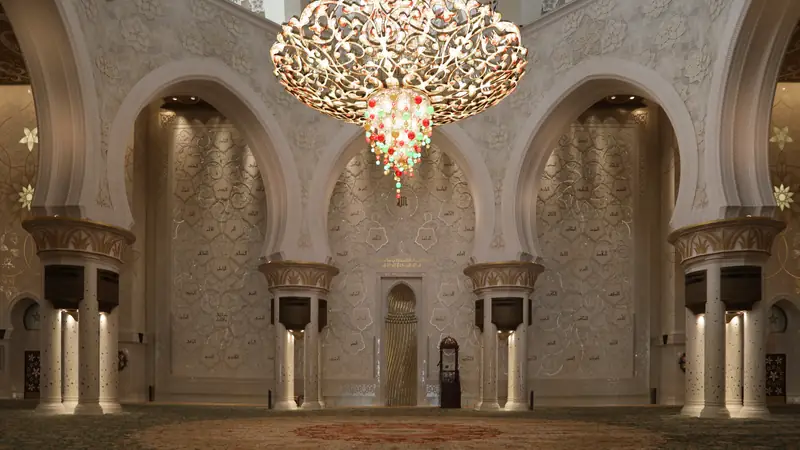
The Sheikh Zayed Grand Mosque in Abu Dhabi is an active place of worship that welcomes visitors of every faith. The Sheikh Zayed Grand Mosque Centre publishes its dress and conduct rules, and staff check visitors at the entrance. There is no room for improvisation: if your clothing does not meet the rules, you can be refused entry.
For men and women alike, clothing must be modest and loose, covering arms and legs fully, with nothing sheer or tight. Women must also cover their hair with a scarf. In practice that means sleeves to the wrist, trousers or a skirt to the ankle and a headscarf that stays in place for the whole visit. Shorts, short skirts, leggings and short sleeves will not get through.
The easiest combination for women is a long-sleeved maxi dress or tunic over trousers, in an opaque fabric, with a large scarf. For men, full-length trousers and a long-sleeved shirt. Shoes come off before the prayer hall, so wear something you can slip on and off easily.
Access rules, opening times and any changes are published by the Centre and can shift during the year, including around religious occasions. Always check the Centre's official website before you leave Dubai. If the visit is part of a day in Abu Dhabi, plan the whole day's outfit around the mosque and carry a lighter layer for everything else.
Packing by season
Visit Dubai's published monthly averages are a good guide for your suitcase: January is the coolest month at 21°C on average, and July the hottest at 36°C. From October to April the weather is at its most comfortable for outdoor plans; from May to September, days are built around indoor attractions, water and the cooler hours. Our post on the best time to visit goes through it month by month.
One thing people rarely mention: humidity near the coast can make it feel hotter than the thermometer suggests. Natural, breathable fabrics such as linen and cotton matter far more than the number of items you pack. Travellers from northern India or the American South will recognise the feeling; those coming from a British winter should plan for the contrast.
| Period | Published average | What to pack |
|---|---|---|
| December to February | 21°C to 24°C | Light layers, trousers and long sleeves for evenings, a jacket for the desert and balloon flights |
| March, April, October and November | 24°C to 31°C | Summer clothes, one layer for evenings and air conditioning, a hat |
| May to September | 31°C to 36°C | Pale linen and cotton, hat, sunglasses, high-factor sunscreen, reusable water bottle |
A quick checklist before you zip the case
For a week split between Dubai and Abu Dhabi, the ideal suitcase is smaller than you think. Pieces repeat well, and hotel laundry services are quick. What matters are the versatile items that unlock very different plans on the same day.
If you are following our six-night Dubai and Abu Dhabi itinerary, for instance, you will move between beach, mall, desert, a smart dinner and a mosque within a few days. The list below covers every one of those scenarios without overpacking.
- One long tunic, maxi dress or long-sleeved shirt in an opaque fabric, for the mosque and the souks.
- A large scarf or pashmina: it covers your hair at the mosque, keeps sand off in the desert and fends off the air conditioning.
- Two pairs of light trousers or long skirts, and two pairs of knee-length shorts or skirts.
- A kaftan or linen shirt to go from beach to city.
- One smart casual evening outfit: trousers or a dress, closed shoes or smart sandals.
- Comfortable trainers, daytime sandals and flip-flops for the pool.
- Hat, sunglasses and sunscreen; in winter, a light jacket for the evenings.
If you are travelling from the UK, the US or India
- United Kingdom
- A winter escape from the UK lands you in what feels like a warm late spring, so pack summer clothes plus a layer for evenings and the desert. The UAE is 4 hours ahead of the UK in winter and 3 hours ahead during British Summer Time, which makes for an easy adjustment. Entry rules depend on your passport, so confirm your situation on the official portals (u.ae, ICP at icp.gov.ae and GDRFA Dubai at gdrfad.gov.ae) before you travel. If you take prescription medicines, check each one against the UAE list before you fly.
- United States
- If you are used to US resort dress, expect evenings in Dubai to be a notch smarter, and the indoor air conditioning to be just as strong as at home. The UAE is UTC+4 with no daylight saving, so the gap with your home time zone changes when US clocks change; check it for your travel dates. Visa requirements depend on your passport: confirm on u.ae, ICP (icp.gov.ae) and GDRFA Dubai (gdrfad.gov.ae) before booking. Check any prescription medicines against the UAE list before packing them.
- India
- Travellers from India will find the dress logic familiar: modest in public, relaxed at the hotel and at the pool. The summer months are hot and humid, much like coastal Indian cities. On entry, visa on arrival is only for Indian passport holders who hold a valid visa or residence permit from the US, the UK, the EU or other countries listed by the UAE government; otherwise you need an e-visa arranged in advance. Always confirm on u.ae, ICP (icp.gov.ae) and GDRFA Dubai (gdrfad.gov.ae) before travelling, and check your prescriptions against the UAE medicines list.
Frequently asked questions
Do women need to cover their hair in Dubai?
No. In the city, modest clothing covering shoulders and knees is enough. Hair only needs to be covered inside mosques, such as the Sheikh Zayed Grand Mosque in Abu Dhabi.
Can I wear shorts in Dubai?
Yes. Knee-length shorts are fine in malls and around the city. Very short shorts stand out in public spaces, and many smart restaurants ask men not to wear shorts in the evening.
Can I wear a bikini on the beach in Dubai and Abu Dhabi?
Yes, on beaches, by pools and at water parks. Topless sunbathing and nudity are prohibited. Cover up before walking into a taxi, shop or restaurant.
What is the dress code for the Sheikh Zayed Grand Mosque?
Loose, opaque clothing covering arms and legs fully; women must also cover their hair. Check the current rules on the Centre's official website before you go. See our Grand Mosque page for more.
What should I wear on a desert safari?
Loose, light clothes, closed shoes, sunglasses and a scarf for sand and wind. From October to March, bring a jacket for the evening and for early mornings.
Do I need a jacket in Dubai?
In the cooler months, yes, for evenings, the desert and balloon flights. All year round, a light layer helps against the strong air conditioning in malls, the Metro and restaurants.
Is there a dress code in Dubai restaurants?
Many hotel restaurants, rooftop bars and lounges expect smart casual and may refuse shorts, flip-flops and sleeveless vests. Each venue sets its own rule, so check when you book.
Official sources consulted (6)
- Sheikh Zayed Grand Mosque Centre. https://www.szgmc.gov.ae Consulted on .
- Visit Dubai, Weather in Dubai. https://www.visitdubai.com/en/plan-your-trip/weather-in-dubai Consulted on .
- UAE Government, The UAE's Heritage. https://u.ae/en/about-the-uae/culture/arab-and-islamic-heritage Consulted on .
- Visit Dubai, Ramadan in Dubai Frequently Asked Questions. https://www.visitdubai.com/en/festivals-and-events/ramadan-in-dubai/faqs Consulted on .
- UAE Government, Check if you need a visa to enter the UAE. https://u.ae/en/information-and-services/visa-and-emirates-id/Visa-information/do-you-need-an-entry-permit-or-a-visa-to-enter-the-uae Consulted on .
- Visit Abu Dhabi. https://visitabudhabi.ae/en Consulted on .