Experiences
Dubai desert safari: how to choose the right one, and do it safely
Morning, evening with dinner, overnight or a conservation reserve: what each desert safari really involves, what is usually included and how to spot a licensed operator.
Published on 11 min readBy High Class Dubai
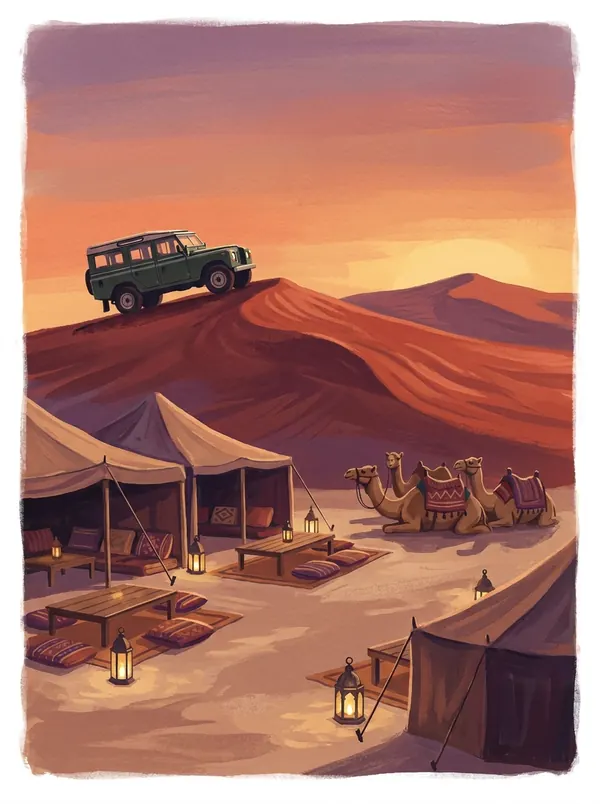
Key takeaways
- There are four main formats: morning, evening with dinner, overnight and a conservation reserve visit.
- The Dubai Desert Conservation Reserve is only open through Al Maha or operators carrying the reserve's seal, on set routes.
- Book only with an operator licensed by Dubai's Department of Economy and Tourism (DET), with insurance.
- Pregnant travellers and anyone with back, neck or heart problems should skip dune bashing.
- October to April is the comfortable season; in summer, go at dawn or late afternoon only.
In this article
Why the desert deserves a proper slot in your trip
Most first-time visitors build their Dubai plans around towers, malls and beaches, and that is fair enough. But the city only really makes sense once you leave it. Barely half an hour from the centre, the motorway gives way to cinnamon-coloured dunes, low scrub and a silence that catches you off guard after the roar of Sheikh Zayed Road. This is where the Emirates' Bedouin roots lie, and for many travellers it ends up being the moment they remember most.
The catch is that desert safari has become a catch-all label. It covers wildly different experiences: a coach-party camp with a hundred people and loud speakers, a quiet breakfast in a protected reserve, a night under the stars, or a high-speed 4x4 run that leaves half the car green. Choosing well is the difference between a beautiful memory and a long, tiring afternoon.
This guide walks through what each format offers, what is normally included, how to check an operator is properly licensed and who should think twice before climbing into a 4x4 for the dunes. If you are still shaping the rest of the trip, our Dubai guide will help you place the desert among the other days.
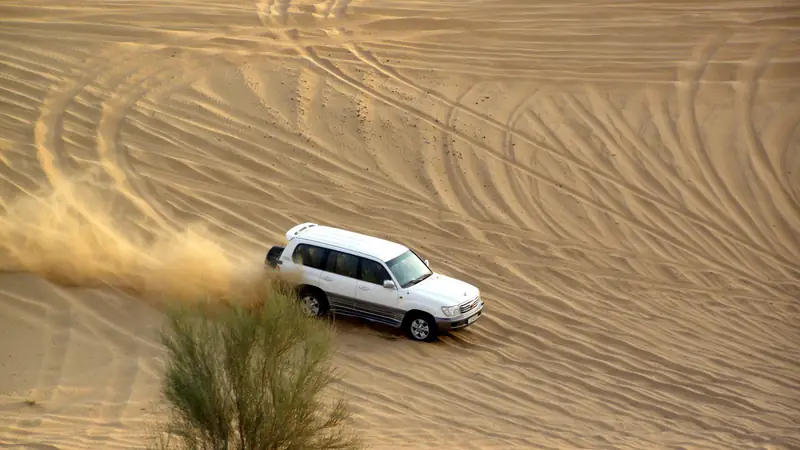
The four types of safari, and who each one suits
Operators sell dozens of packages, yet nearly all of them are variations on four formats. The difference is not just the clock: temperature, crowd size, activities and how physically demanding the trip is all change with it.
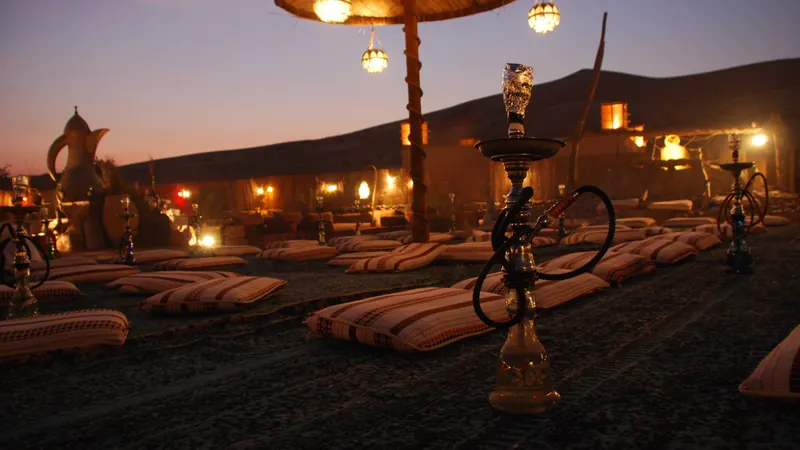
The evening safari with dinner is the classic. You are collected mid-afternoon, head into the dunes, watch the sun go down and finish at a camp with dinner and entertainment. Depending on the package and how far your hotel is from the desert, the whole outing usually runs from three to seven hours. If you only have one desert day, this is the most complete option.
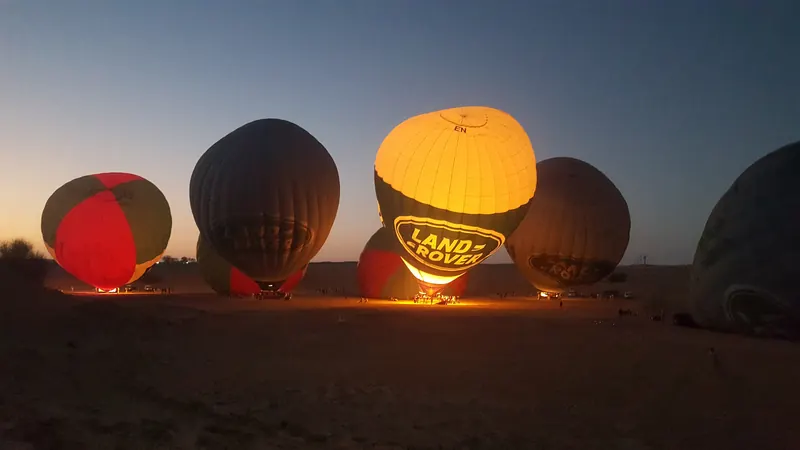
The morning safari is shorter and calmer. It leaves early, makes the most of soft light and sand that is still cool underfoot, and gets you back to the hotel before lunch. It works well for families who want the dunes without a late night, and for anyone with a dinner booking in town that evening. Sunrise hot air balloon flights fall into this slot too, with a hotel pick-up while it is still dark.
An overnight stay is for those who want a sky without city glow and to wake up to silent dunes. It can mean a tented camp or a proper resort. Inside the Dubai Desert Conservation Reserve, Al Maha is the only resort offering overnight stays.
| Format | Typical timing | Best for | Bear in mind |
|---|---|---|---|
| Morning | Early morning to lunchtime | Families, photographers, dunes without a late night | Most packages have no dinner or shows |
| Evening with dinner | Mid-afternoon to night | First-timers, couples, groups | Large camps can be crowded and noisy |
| Overnight | Late afternoon to next morning | Stargazing and real quiet | Winter nights get cold, so pack layers |
| Conservation reserve (DDCR) | Morning or late afternoon | Nature, wildlife, an unhurried pace | Routes set by the reserve, less adrenaline |
Dubai Desert Conservation Reserve: the desert with rules
If you would rather see wildlife than chase adrenaline, the Dubai Desert Conservation Reserve (DDCR) is the place. According to Visit Dubai, it covers 225 km², roughly 5% of the emirate, is fenced to protect its plants and animals and sits off the Dubai to Al Ain road. Since conservation began in 2004 it has become home to more than 50 plant species, 120 bird species and 43 species of mammals and reptiles.
You cannot simply drive in. Visits are run by Al Maha Desert Resort or by specialist operators such as Arabian Adventures, Lama Tours, Platinum Heritage and Alpha Tours. The reserve itself explains that approved tours carry its seal, with certified guides and a focus on nature and culture. In practice that means fixed routes for the 4x4s, fewer vehicles on any one dune and a guide who actually explains what you are looking at.
Activities listed by the reserve include:
- A 4x4 dune drive on predefined routes to a Bedouin-style camp.
- A wildlife drive, with a guide explaining desert ecology.
- Camel rides, horse riding, falconry, archery and sandboarding.
- Dinner in the dunes, private dining, camping or a balloon flight.
What is usually included, and what costs extra
Every operator builds its own package, so treat the list below as a picture of what is common rather than a promise. Before paying, ask for written confirmation of what is included on your date and in your format.
On most evening safaris, the standard package covers hotel pick-up and drop-off, the 4x4 dune drive, a sunset stop, dinner at the camp and some entertainment. Many camps offer alcohol-free options; if drinks matter to your group either way, ask in advance. Quad bikes, dune buggies and professional photos are typically charged separately.
With premium packages, what you are really paying for is space and time: a private vehicle, a reserved table, a less crowded camp, plated dinner instead of a buffet and a dedicated guide. For couples and families who travel comfortably, that matters far more than any extra line on the itinerary.
| Item | Standard package | Premium or private |
|---|---|---|
| Transport | Shared vehicle with other guests | Private vehicle, timings set around your group |
| Dunes | 4x4 convoy drive | Drive adjusted to the group, including a gentler option |
| Dinner | Buffet at the camp | Reserved or served dinner, sometimes in a separate area |
| Activities | Short camel ride and sandboarding in many packages | Falconry, wildlife drive, horse riding, depending on operator |
| Extras | Quad bikes, buggies and photos charged separately | Varies: get it in writing before booking |
How to choose a licensed operator
Tour companies in Dubai operate under a licence from the Department of Economy and Tourism (DET). That is not red tape for its own sake: it means there is a registered business behind the trip, responsible for its drivers, vehicles and insurance. Rock-bottom deals on social media and street touts are exactly where untrained drivers and poorly maintained cars turn up.
Ask these questions before you book. A reputable operator will answer every one without hesitation.
- What is the company's trading name and Dubai tourism licence number?
- Is the trip insured, and what does the cover include if something goes wrong?
- Do the vehicles have roll cages and seatbelts on every seat?
- How many people per car, and how many groups share the camp?
- Can we ask for a gentler drive, or skip the dunes altogether?
- What is the cancellation policy for weather, such as a sandstorm or extreme heat?
- If we want the DDCR, does the tour carry the reserve's seal of approval?
Safety: who should skip dune bashing
Dune bashing, the 4x4 run up and down steep dunes at sharp angles, is great fun for some and genuinely unpleasant for others. The jolts are real, the car tilts hard and it feels a lot like a rollercoaster without rails. Operators' usual guidance is that certain people should sit this part out.
These are the groups operators typically ask to avoid dune bashing. If in any doubt, speak to the operator and to your doctor before you travel, not on the day.
- Anyone who is pregnant, at any stage.
- People with back or neck problems, including slipped discs.
- Anyone with a heart condition, uncontrolled high blood pressure or recent surgery.
- Those who suffer badly from motion sickness.
- Babies and young children, with age rules that differ from operator to operator.
When to go and what to pack
Visit Dubai describes October to April as the pleasant-weather season, and its published monthly averages show why: 31°C in October, 27°C in November, 24°C in December, 21°C in January, 22°C in February and 24°C in March. From May to September the averages climb, peaking at 36°C in July. The desert runs all year, but in summer timing becomes everything: early morning or late afternoon, never the middle of the day. Our guide to the best time to visit breaks the year down month by month.
One thing few people mention: in winter the desert gets properly cold after dark. Leave in a T-shirt at four in the afternoon and you will be shivering by nine. Bring layers.
Your day bag only needs the basics:
- Water, even if the operator provides it.
- Sunglasses, sunscreen and a hat or scarf against sand and wind.
- A light jacket or jumper for evenings between November and March.
- Closed shoes or sandals that stay on; on the sand, many people simply go barefoot.
- Travel sickness tablets if you are prone to car sickness.
- A small pouch to keep your phone and camera away from fine sand.
Al Qudra, and fitting the desert into your itinerary
Not every desert outing has to be a safari. The Al Qudra lakes sit inside the Al Marmoom Desert Conservation Reserve, about 55 km from the city centre along the D63, according to the UAE's Ministry of Climate Change and Environment (MOCCAE). You do not need a 4x4, there is no entry fee and, per Visit Dubai, the drive from Downtown takes 30 to 45 minutes depending on traffic. Alongside runs an 86 km cycle track. With a private driver, it makes a lovely late-afternoon outing with no package or camp involved.
For planning, think of it this way: an evening safari takes over your day from mid-afternoon, so keep the morning light, perhaps the old quarter of Al Fahidi or simply the hotel pool. Avoid booking the desert on arrival day or the day after a long-haul flight. Your body clock will still be at home, and a 4x4 on the dunes is the worst place to find that out.
If you go for the morning safari, the day can end at the Burj Khalifa at dusk. And if your trip includes the capital, a day out to Al Ain shows a completely different desert landscape. Practical details on the reserve and the lakes are on our Dubai desert page.
How High Class plans your desert day
We do not sell off-the-shelf safaris. Our local team, with Huda on WhatsApp, starts by asking who is travelling, what pace suits the group and what is already on the itinerary. From there we suggest the format that makes sense: a conservation visit for nature lovers, a premium camp for a special evening, a balloon flight for those happy to be up before dawn.
We work with licensed operators and, where it helps, a private driver from your hotel, so you are not tied to a shared coach timetable. If anyone in the group should not do the dune drive, we arrange the alternative in advance. Timings, conditions and availability change through the year, and we confirm everything for your dates before anything is booked.
If you are travelling from the UK, the US or India
- United Kingdom
- The UAE is 4 hours ahead of the UK in winter and 3 hours ahead during British Summer Time, so jet lag is mild and an evening safari on day two is perfectly realistic. October half-term and the February break both fall in the comfortable desert season, which also makes them busy: book camps and balloon flights early. Entry rules depend on your passport, so always confirm on the official portals u.ae, ICP (icp.gov.ae) and GDRFA Dubai (gdrfad.gov.ae) before you fly.
- United States
- Dubai is 8 or 9 hours ahead of the US East Coast, depending on daylight saving, and more from the West Coast. Give yourself two or three nights before the desert, because a dune drive on a body that thinks it is 3am is no fun. Thanksgiving week and the winter holidays land in the best desert weather; summer trips work too, as long as the safari is a sunrise or late-afternoon one. Check your entry requirements on u.ae, ICP (icp.gov.ae) or GDRFA Dubai (gdrfad.gov.ae) before booking.
- India
- With the UAE just an hour and a half behind India and short direct flights, a desert evening can fit even into a long weekend. Diwali and the winter school holidays coincide with the cooler months, so popular camps fill up; ask early for vegetarian or Jain meals rather than relying on the buffet. On visas: visa on arrival is only for Indian passport holders who hold a valid visa or residence permit from the US, the UK, the EU or other countries listed by the UAE government. Otherwise you need an e-visa arranged before travel. Always confirm the current rules on u.ae, ICP (icp.gov.ae) and GDRFA Dubai (gdrfad.gov.ae).
Frequently asked questions
Is a morning or evening desert safari better in Dubai?
For most people the evening safari with dinner is the fuller experience, combining dunes, sunset and a camp. If you prefer calm, photography or are travelling with young children, the morning safari is often the better fit. In summer, avoid any desert activity in the middle of the day.
Is a Dubai desert safari safe?
It is safe with a DET-licensed operator, well-maintained vehicles, seatbelts on every seat and a trained driver. The risks lie in informal, very cheap offers. Pregnant travellers and anyone with back, neck or heart problems should skip dune bashing.
Can I do a desert safari while pregnant?
Operators' usual guidance is that pregnant travellers should not do dune bashing. You can still reach the camp on a gentle route or choose a conservation visit. Check with the operator and your doctor first.
Can I visit the Dubai Desert Conservation Reserve on my own?
No. Official sources describe visits through Al Maha Desert Resort or specialist operators carrying the reserve's seal, using set routes.
What should I wear on a desert safari?
Light, comfortable clothing that covers your shoulders, plus sunglasses and a hat. From November to March, bring a jacket, because the desert cools quickly after sunset.
Is a desert safari suitable for children?
Yes, but the minimum age for dune bashing varies between operators. With young children, a morning safari or a gentle drive usually works best.
Do I need a 4x4 to get to Al Qudra Lakes?
No. According to MOCCAE, Al Qudra is reachable without a 4x4 and there is no entry fee. It is about 55 km from the city centre via the D63.
Official sources consulted (7)
- Dubai Desert Conservation Reserve, What to do. https://www.ddcr.org/what-to-do/?day-visits-and-tours Consulted on .
- Visit Dubai, Dubai Desert Conservation Reserve. https://www.visitdubai.com/en/places-to-visit/dubai-desert-conservation-reserve Consulted on .
- Visit Dubai, Al Qudra Lakes. https://www.visitdubai.com/en/places-to-visit/al-qudra-lakes Consulted on .
- MOCCAE, Al Qudra Lakes. https://moccae.gov.ae/en/knowledge/ecotourism/al-qudra-lakes Consulted on .
- Visit Dubai, Weather in Dubai. https://www.visitdubai.com/en/plan-your-trip/weather-in-dubai Consulted on .
- Dubai Department of Economy and Tourism (DET). https://www.dubaidet.gov.ae/en Consulted on .
- UAE Government, Check if you need a visa to enter the UAE. https://u.ae/en/information-and-services/visa-and-emirates-id/Visa-information/do-you-need-an-entry-permit-or-a-visa-to-enter-the-uae Consulted on .