Culture and etiquette
Dubai Gold Souk and Spice Souk: how to visit, buy gold and bargain
The souks of Deira and Bur Dubai are where old Dubai still trades. How to get there by metro and abra, how gold is priced by the gram, what the carat marks mean and how to plan an easy half-day route.
Published on 10 min readBy High Class Dubai
Key takeaways
- The Gold Souk and Spice Souk are in Deira, in the Al Ras area by the Creek; the Textile Souk is across the water in Bur Dubai.
- The metro Green Line stops at Al Ras and Gold Souq; the traditional abra across the Creek costs AED 1 per person per trip, in cash.
- Gold is priced as weight times the day's rate plus a making charge, and the making charge is the part you can negotiate.
- Know the carat marks: 22K is stamped 916 and 18K is stamped 750. Always ask for a detailed receipt.
- Many shops open from around 10am to 10pm, some close in the afternoon and Friday starts later: check before you go.
In this article
Where the Dubai souks are, and why they are worth the trip
Long before the malls, Dubai traded along its Creek. The souks that grew up on its banks are still there, and they are the best place to feel the old port city that existed before the towers. On the Deira side, in the Al Ras area, you will find the Gold Souk and the Spice Souk, a few minutes' walk apart. Across the water, in Bur Dubai, the Textile Souk sits close to the Al Fahidi Historical Neighbourhood and the abra station.
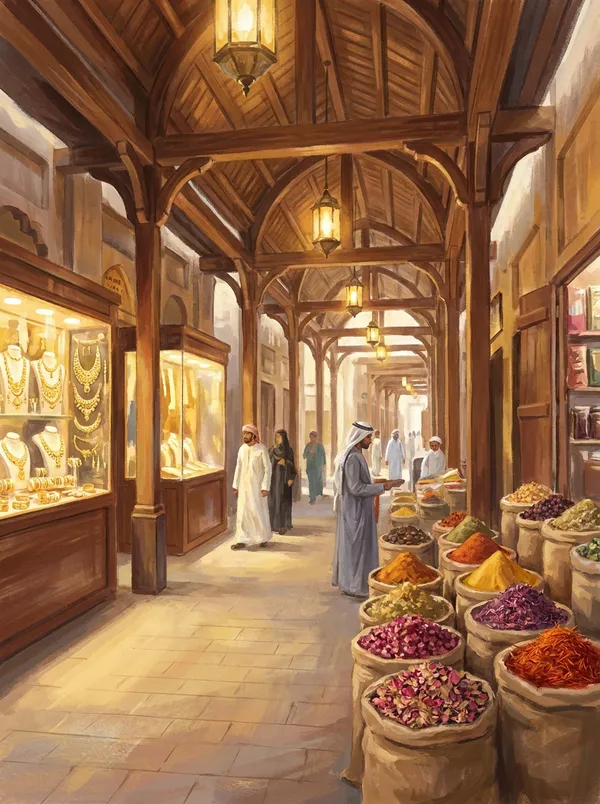
The atmosphere is completely different from the malls. Lanes are narrow and partly covered, shopkeepers call out from their doorways, windows glitter with necklaces and bangles, and the air smells of saffron, cardamom and frankincense. Some visitors come to buy, others simply to look, and both are perfectly welcome.
In August 2025, Dubai Municipality completed heritage trails through the markets of Deira, with a 995-metre route through the Gold Souq and a 359-metre axis through the Spice Souq. They make the old lanes easier to follow and add context to what you see.
Getting to the Gold Souk: metro, abra or car
The souks are easy to reach, and how you arrive can be part of the fun. By metro, the Green Line has two stations right in the area: Al Ras and Gold Souq. From either, it is a short walk into the lanes.
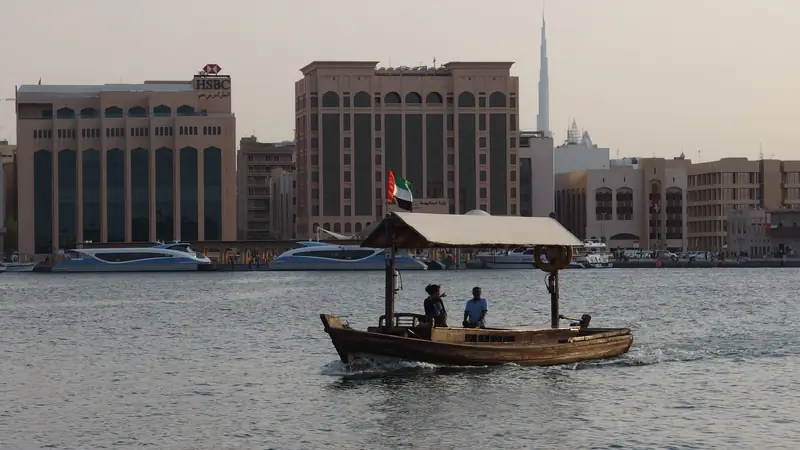
The most memorable way, though, is by abra, the wooden water taxi that has crossed the Creek for generations. The RTA runs the traditional route CR1 between Bur Dubai and the Deira Old Souq for AED 1 per person per trip, paid in cash, normally from 6am to midnight. Route CR2, between Dubai Old Souq and Al Sabkha, runs 24 hours. Route CR5, from Al Fahidi to Deira Old Souq, charges AED 2 and accepts cash, nol and bank cards, according to the RTA.
By car, traffic and parking around the souks can be slow at busy times. With a private driver, you can be dropped on one bank and collected on the other, which makes the abra crossing easy to include. The Dubai Creek and souks page has a summary of the other abra routes.
| How | Route | Bear in mind |
|---|---|---|
| Metro | Green Line to Al Ras or Gold Souq stations | Short walk into the souk lanes |
| Traditional abra | CR1, Bur Dubai to Deira Old Souq | AED 1 per person per trip, cash, normally 6am to midnight |
| Abra from Al Fahidi | CR5, Al Fahidi to Deira Old Souq | AED 2, cash, nol or card |
| Private driver | Drop-off on one bank, pick-up on the other | Avoids parking and lets you cross by abra |
The Gold Souk: what to expect
The Gold Souk is a dense grid of jewellery shops, from small family businesses to larger chains, with window after window of chains, bangles, rings and wedding sets. Next to the traditional souk, the Gold Souk Extension is a more modern commercial area, with air conditioning and a more mall-like feel, useful if the heat gets too much.
Hours vary from shop to shop. Many open from around 10am to 10pm, some close for a few hours in the afternoon, and on Friday shops open later. Hours also change during Ramadan and on public holidays, so check before you plan a specific time.
You do not need to buy anything to enjoy it. Browsing is normal, shopkeepers are used to visitors and a polite 'just looking, thank you' is enough. If you do want to buy, the next section explains how pricing works, which is the key to a good deal.
A word on photos: the window displays are fair game, but ask before photographing shopkeepers or other customers, and respect a no. It is a working market, and most people are happy to chat if you are polite.
How gold prices work in Dubai, and what the carat marks mean
Buying gold in Dubai is far less mysterious once you know the formula. The Dubai Gold and Jewellery Group publishes a daily reference rate per gram for each carat. The final price of a piece is its weight multiplied by the day's rate, plus a making charge for the craftsmanship. The gold rate is fixed for the day; the making charge is where you can negotiate.
Carat tells you how much pure gold is in the piece. These are the purities you will see most often:
- Check the day's rate before you go, so you know the starting point.
- Ask the shop to weigh the piece in front of you.
- Negotiate the making charge, not the gold rate.
- Ask for a receipt that shows the carat, the weight, the price per gram and the making charge.
- Compare the same piece in two or three shops before deciding.
| Carat | Gold content | What to look for |
|---|---|---|
| 24K | About 99.9% | Purest and softest; the carat should be stated on the receipt |
| 22K | About 91.6% | Often marked 916 |
| 21K | About 87.5% | The carat should be stated on the receipt |
| 18K | 75% | Often marked 750; harder, common with stones |
The Spice Souk: saffron, frankincense and how to bargain
A short walk from the gold shops, the Spice Souk is the most sensory part of the visit. Open sacks of dried limes, chillies, cardamom, dried flowers and teas line the lanes, along with frankincense, oud chips and saffron. It is a lovely place to buy small gifts that travel well.
Bargaining is expected here, and it is part of the fun. Start by asking the price, show interest without rushing, and make a reasonable counter-offer. Stay friendly: a smile and a little patience work far better than hard tactics. If you cannot agree, thank the shopkeeper and move on; there is usually another stall around the corner.
Quality varies a lot, especially with saffron. Buy from shops that let you see and smell the product, and be wary of prices that seem far too low.
The Textile Souk and Bur Dubai side
Across the Creek, in Bur Dubai, the Textile Souk is a covered market of fabric shops, scarves and souvenirs, close to the abra station and to Al Fahidi. It is a good place to pick up a pashmina or a light scarf, which is also useful for visiting mosques.
Right next to it, the Al Fahidi Historical Neighbourhood is a maze of lanes, courtyards and wind towers that shows how people lived in Dubai from the mid-19th century to the 1970s. The Coffee Museum there is free and, according to Dubai Culture, open Sunday to Thursday from 9am to 5pm and closed on Fridays; check before you go. A little further along the Creek, the Al Shindagha Museum tells the story of the city on the water and includes the Perfume House.
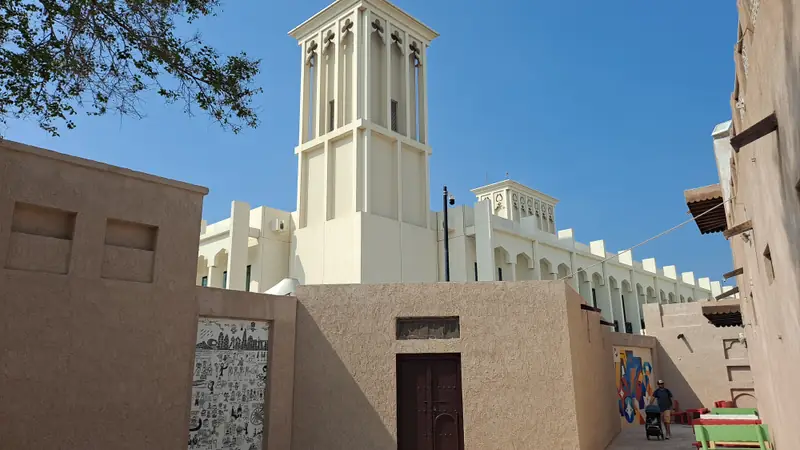
A half-day route through old Dubai and the souks
The best way to see the souks is as part of a slow half day in old Dubai, ideally finishing in the late afternoon when the heat softens and the lanes come alive.
Short on time? With only two hours, skip the museums: take the metro or a car straight to the Deira side, walk the Spice Souk and then the Gold Souk, and finish with an abra crossing to Bur Dubai at sunset. It is a compact taste of old Dubai that fits easily before dinner.
For the full half day, this is the order we suggest:
- Morning or early afternoon: walk the lanes of Al Fahidi and stop at the Coffee Museum if it is open.
- Continue along the Creek to the Al Shindagha Museum and its Perfume House.
- Browse the Textile Souk on the Bur Dubai side.
- Cross the Creek by abra to the Deira Old Souq.
- Late afternoon: the Spice Souk, then the Gold Souk as the shop lights come on.
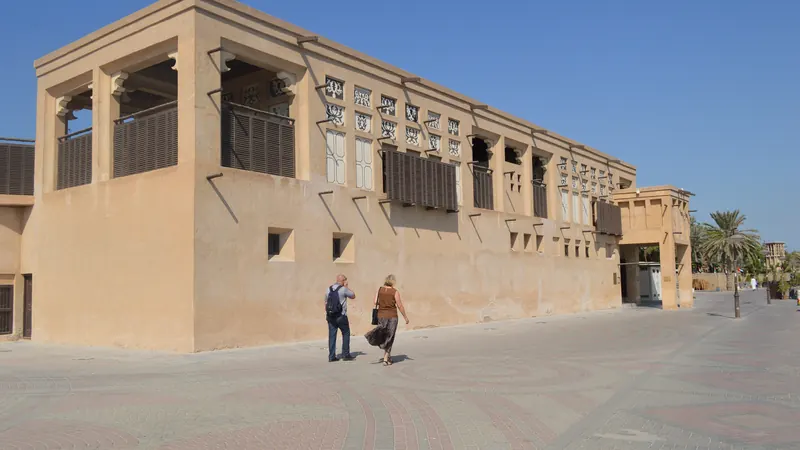
How High Class plans your souk visit
We plan the souks as a relaxed half day rather than a rushed stop. On WhatsApp, we ask whether you want to buy gold, browse the spices or simply soak up old Dubai, and we suggest the best time of day for your dates.
A car with a driver takes you to Al Fahidi, waits on the Deira side after your abra crossing and collects you at the end, bags and all. If you want help buying gold, we explain the pricing beforehand so you can negotiate with confidence. With children or older relatives, we shorten the walking parts and add breaks. Opening hours change, especially on Fridays and during Ramadan, so we confirm everything for your date first. For the malls, see our guide to the best places to shop in Dubai.
If you are travelling from the UK, the US or India
- United Kingdom
- British visitors are often surprised by how relaxed the souks are compared with markets elsewhere: browsing without buying is perfectly normal. If you buy gold, check UK customs allowances for your return and keep the detailed receipt. Entry rules depend on your passport: confirm on u.ae, ICP (icp.gov.ae) and GDRFA Dubai (gdrfad.gov.ae).
- United States
- Gold is sold by weight and carat here, which can feel unfamiliar to Americans used to fixed retail prices. Learn the formula before you go and negotiate only the making charge. Check US customs rules on declaring jewellery when you return. Confirm your entry requirements on u.ae, ICP (icp.gov.ae) or GDRFA Dubai (gdrfad.gov.ae).
- India
- Many Indian families plan a Gold Souk visit around weddings and festivals such as Diwali and Akshaya Tritiya, so the souk can be busy at those times. The 22K standard, stamped 916, will be familiar. Check India's customs rules on gold before you buy. Visa on arrival applies only to Indian passport holders with a valid visa or residence permit from the countries listed by the UAE government; otherwise arrange an e-visa. Always confirm on u.ae, ICP (icp.gov.ae) and GDRFA Dubai (gdrfad.gov.ae).
Frequently asked questions
Where is the Gold Souk in Dubai?
In Deira, in the Al Ras area by Dubai Creek, a short walk from the Spice Souk. The nearest metro stations are Al Ras and Gold Souq on the Green Line.
Is gold cheaper in Dubai?
There is no simple yes or no. Gold is priced at the published daily rate per gram, so compare it with prices at home on the same day. What helps in Dubai is transparency, and a making charge you can negotiate.
What does 916 mean on gold?
It is the mark for 22-carat gold, about 91.6% pure. 750 marks 18-carat gold, which is 75% pure.
Can you bargain in the Gold Souk?
Yes, on the making charge. The gold rate is set daily, so negotiate the craftsmanship part of the price and compare a few shops.
What time does the Gold Souk open?
Many shops open from around 10am to 10pm, some close for a few hours in the afternoon and Friday starts later. Hours vary by shop and change during Ramadan.
How much is the abra across Dubai Creek?
On the traditional CR1 route between Bur Dubai and the Deira Old Souq, AED 1 per person per trip, in cash. Route CR5 from Al Fahidi costs AED 2, according to the RTA.
What should I buy in the Spice Souk?
Small, easy-to-carry items such as saffron, cardamom, dried limes, teas and frankincense. Ask for sealed packaging and check your country's rules on bringing food products home.
Official sources consulted (5)
- Dubai Gold and Jewellery Group, Dubai City of Gold. https://www.dubaicityofgold.com/ Consulted on .
- Dubai Municipality. https://www.dm.gov.ae/ Consulted on .
- RTA Dubai, Dubai Creek Abra. https://www.rta.ae/wps/portal/rta/ae/home/promotion/new-marine-routes-abra Consulted on .
- Visit Dubai, Al Fahidi Historical Neighbourhood. https://www.visitdubai.com/en/places-to-visit/al-fahidi-historical-neighbourhood Consulted on .
- Dubai Culture. https://dubaiculture.gov.ae/en/ Consulted on .