Culture and etiquette
Old Dubai walking tour: Al Fahidi, the Creek and the souks in one day
Wind towers, quiet lanes, a one-dirham abra and the scent of the Spice Souk: a walking route through Old Dubai, in the right order and at the right time of day.
Published on 10 min readBy High Class Dubai
Key takeaways
- Start in the Al Fahidi Historical Neighbourhood in the morning, when the lanes are quiet and the heat is gentler, and finish at the souks in the late afternoon.
- The Coffee Museum in Al Fahidi is free and, according to Dubai Culture, opens Sunday to Thursday from 9am to 5pm and closes on Fridays; check before you go.
- Al Shindagha Museum, on the Creek, tells the story of the city and includes the Perfume House.
- The abra across Dubai Creek costs AED 1 per person per trip, in cash, and drops you on the Deira side, a short walk from the Gold Souk and the Spice Souk.
- The old Al Fahidi Fort is worth seeing from the outside, but do not plan your day around going in: check its current status before you visit.
In this article
Old Dubai walking tour: what to expect
Before the towers, the malls and the islands, Dubai was a trading town on the Creek. Its heart is still there, on both banks of the water: in Bur Dubai, the restored houses of Al Fahidi and the heritage district of Al Shindagha; in Deira, the Gold Souk and the Spice Souk. Between them, the small wooden abras cross the Creek all day long, as they have for generations.
This is the part of Dubai you see best on foot. The distances are short, the lanes are too narrow for cars and the most interesting details, a carved door, a courtyard, a sack of saffron, only appear when you slow down. In one well-planned day you can walk through the history of the city, cross the Creek by boat and end up bargaining for spices at sunset.
This guide gives you a route in the right order, the opening times we know from official sources and the practical tips that make the difference. Opening hours change on public holidays and during Ramadan, so always check the official websites for your date.
Old Dubai in one day: the route at a glance
The route follows the sun. The open lanes and museums come first, while it is cooler; the boat crossing and the markets come later, when the light softens and the souks come to life. Times are a guide, not a timetable.
| Stop | Side of the Creek | Best time | Allow |
|---|---|---|---|
| Al Fahidi Historical Neighbourhood | Bur Dubai | Morning | At least two hours |
| Coffee Museum | Bur Dubai, inside Al Fahidi | Morning, Sunday to Thursday | 30 to 45 minutes |
| Al Shindagha Museum and Perfume House | Bur Dubai, on the Creek | Late morning or after lunch | One to two hours |
| Textile Souk and abra station | Bur Dubai | Afternoon | 30 minutes |
| Abra across Dubai Creek | From Bur Dubai to Deira | Late afternoon | A few minutes |
| Spice Souk and Gold Souk | Deira | Late afternoon and early evening | One to two hours |
Al Fahidi Historical Neighbourhood: wind towers and quiet lanes
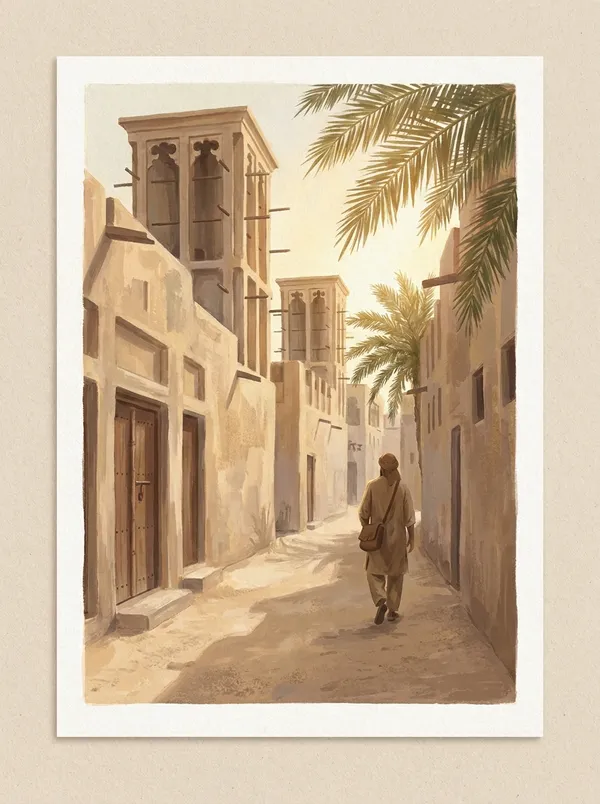
Start in the Al Fahidi Historical Neighbourhood, also known by its old name, Al Bastakiya. Dubai Culture describes it as a place that represents local life from the mid-19th century to the 1970s, and it feels that way: narrow lanes between sand-coloured walls, heavy wooden doors, shaded courtyards and, above the roofs, the wind towers that cooled the houses long before air conditioning.
The best way to see it is simply to wander. Many of the old houses now hold museums, galleries, cafés and cultural spaces, and opening times differ from house to house, so you will always find something open in the morning. Go slowly, look up at the towers and step into the courtyards that welcome visitors.
On the edge of the district stands the old Al Fahidi Fort, a historic building worth seeing from the outside. The museum inside, the Dubai Museum, has been reported as closed for some years and we could not confirm that it is open, so do not plan your day around it and check its status before you go.
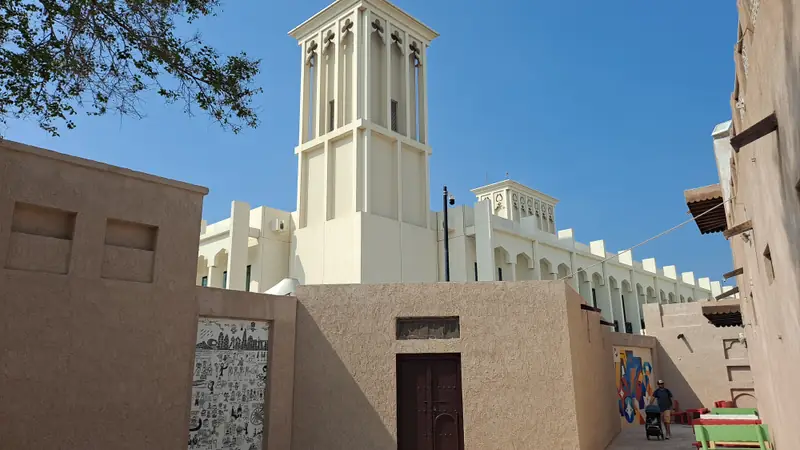
The Coffee Museum and a cultural meal at the SMCCU
Inside Al Fahidi, the Coffee Museum is a lovely stop for a short visit. It tells the story of coffee and its place in local hospitality, with old grinders, pots and brewing tools. According to Dubai Culture, entry is free and the museum opens Sunday to Thursday from 9am to 5pm, closed on Fridays. Check the times on the Dubai Culture website before you go, especially on public holidays and during Ramadan.
For a deeper look at Emirati life, book a cultural meal at the Sheikh Mohammed bin Rashid Al Maktoum Centre for Cultural Understanding (SMCCU), in the heart of the district. Over a traditional breakfast or lunch, a local host explains customs, food and daily life, and you can ask anything. Places are limited, so book in advance through the centre.
If you are travelling with children, the museum and the meal break the walk into short, varied pieces, and the courtyards give everyone a shady place to rest.
Al Shindagha Museum and the Perfume House
From Al Fahidi, continue along the Creek to the Al Shindagha historic district. Its restored heritage buildings by the water form the Al Shindagha Museum, which tells the story of Dubai and its people through exhibitions spread across several buildings by the water.
Do not miss the Perfume House, part of the museum, dedicated to the place of perfume and scent in Emirati culture. It is a good way to understand the oud and the fragrances you will smell later in the souks.
Allow one to two hours here. The district is mostly outdoors between the buildings, so in the warmer months it works better late in the morning or after lunch, with water and a hat. The waterfront walk between Al Shindagha and the abra station is one of the most pleasant stretches of the whole route.
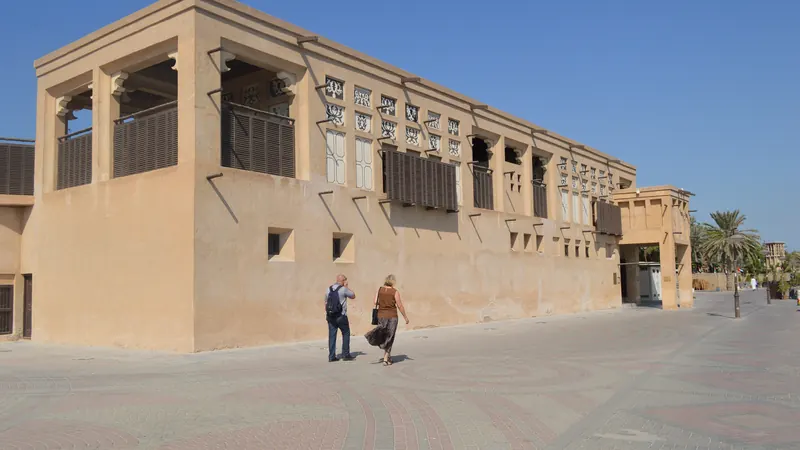
Crossing Dubai Creek by abra: Textile Souk to Deira
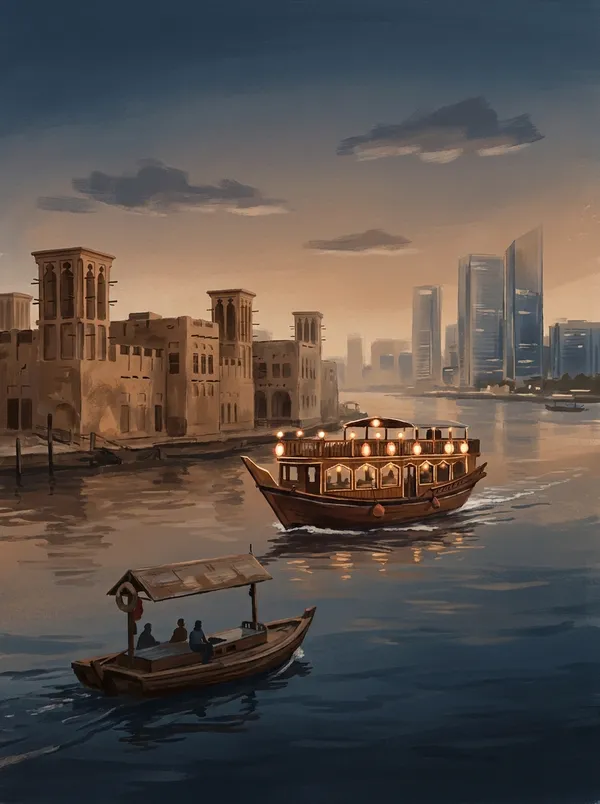
Back in Bur Dubai, walk through the covered lanes of the Textile Souk, with its fabrics, scarves and souvenirs, to the abra station. The abra across Dubai Creek is the highlight of the day for many visitors: a few minutes on a small wooden boat, sitting along the sides, with the old city on one bank and the souks on the other.
The fare is AED 1 per person per trip, paid in cash, so keep a few coins or small notes ready. Route CR1, between Bur Dubai and Deira Old Souq, normally runs from 6am to midnight. Timetables can change on public holidays and during Ramadan, so check the RTA website if you plan a late crossing.
If you prefer a bigger boat, our guide to Dubai boat trips compares the abra with the ferry, dhow cruises and private yachts.
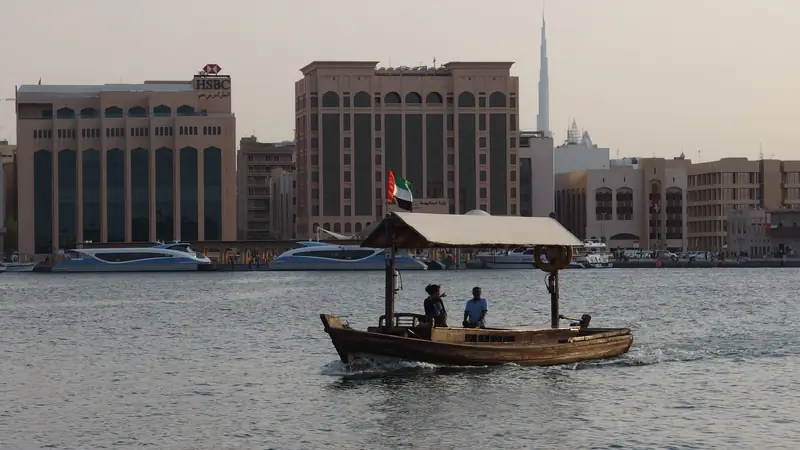
Gold Souk and Spice Souk: ending the walk in Deira
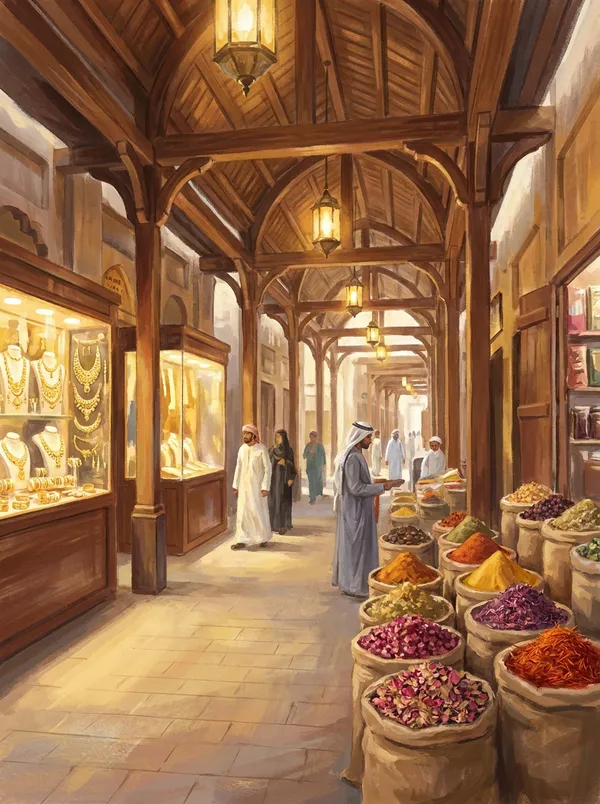
On the Deira side, the Spice Souk is only a few steps from the abra station. Sacks of dried lemons, saffron, frankincense, cardamom and dates line the lanes, and the smell alone is worth the trip. A little further on, the Gold Souk fills the street with shop windows of necklaces, bangles and rings.
In August 2025, Dubai Municipality completed heritage trails in the Deira markets, with a Gold Souq route of 995 metres and a Spice Souq axis of 359 metres, which makes the area easier to explore on foot. Many Gold Souk shops open from around 10am to 10pm, some close in the afternoon and Friday opening is later, but hours vary from shop to shop.
If you are thinking of buying gold, the final price is the weight multiplied by the day's rate plus a making charge, which is negotiable. Our guide to the Gold Souk and Spice Souk explains carats, receipts and how to bargain politely.
- Bring small notes for the spice stalls and ask before photographing people.
- Ask for a written receipt with carat, weight, price per gram and making charge when buying gold.
- The Green Line metro stations Al Ras and Gold Souq are close by if you want to leave by metro.
- Dress modestly: this is a traditional, busy area and shoulders and knees covered is the respectful choice.
Beyond the walk: the Etihad Museum and practical tips
If you have time for one more museum, the Etihad Museum is dedicated to the formation of the United Arab Emirates. It is outside the walking circuit, so go by car rather than on foot, ideally on a different morning or before you start the walk.
The cooler months, from October to April, are the most comfortable time for this route; our post on the best time to visit Dubai explains the seasons. In summer, shorten the outdoor stretches, focus on the museums in the middle of the day and save the abra and the souks for the evening.
Wear comfortable shoes, light clothes that cover shoulders and knees, and a hat, and carry water. Our guide on what to wear in Dubai has more detail. Keep cash for the abra and small purchases, and remember that during Ramadan opening hours change and eating and drinking in public during the day call for extra discretion.
How High Class organises your Old Dubai walking tour
We start on WhatsApp by asking about your group, your pace and what interests you most: architecture, museums, food, shopping or simply the atmosphere. Then we suggest the order of the stops, the best time of day and how long to spend in each place, so the walk never feels rushed.
We arrange a car with a driver to drop you in Al Fahidi in the morning and pick you up in Deira at the end, so nobody has to walk back across the city. For those who want context, a licensed guide can lead the walk. We can book an SMCCU meal, combine the route with the Etihad Museum by car and adapt the distances for children or older travellers. Opening times change, so we confirm everything for your date before booking. For a full week, see our 7-day Dubai and Abu Dhabi itinerary.
If you are travelling from the UK, the US or India
- United Kingdom
- The UAE is 4 hours ahead of the UK in winter and 3 hours ahead during British Summer Time, so an early start in Al Fahidi on your first full day is easy. Half-term, Christmas and Easter are busy periods, and the souks are livelier at weekends. Check your entry requirements on u.ae, ICP (icp.gov.ae) and GDRFA Dubai (gdrfad.gov.ae) before you fly.
- United States
- With Dubai 8 or 9 hours ahead of the East Coast, you will probably wake up early in the first days: use that time for Al Fahidi, when the lanes are empty and cool. Save the souks and the abra for the evening, when jet lag is easier to manage. Check your entry requirements on u.ae, ICP (icp.gov.ae) or GDRFA Dubai (gdrfad.gov.ae) before booking.
- India
- Dubai is only an hour and a half behind India, so the walk works well even on the day after arrival. Diwali and the winter holidays are peak periods, so book a guide or an SMCCU meal early. Visa on arrival applies only to Indian passport holders with a valid visa or residence permit from the countries listed by the UAE government; otherwise arrange an e-visa before travel. Always confirm the current rules on u.ae, ICP (icp.gov.ae) and GDRFA Dubai (gdrfad.gov.ae).
Frequently asked questions
How long does an Old Dubai walking tour take?
Plan a full day at an easy pace: Al Fahidi and the Coffee Museum in the morning, Al Shindagha after that, and the abra and the souks in the late afternoon. A shorter version, Al Fahidi plus the abra and the Spice Souk, takes about half a day.
Is the Coffee Museum in Dubai free?
Yes. According to Dubai Culture, entry is free and it opens Sunday to Thursday from 9am to 5pm, closed on Fridays. Check the times before you go, as they change on public holidays and during Ramadan.
Is the Dubai Museum at Al Fahidi Fort open?
We could not confirm that it is open; it has been reported as closed for some years. See the fort from the outside as a historic building and check its current status before planning a visit.
How much is the abra across Dubai Creek?
AED 1 per person per trip, paid in cash. Route CR1, between Bur Dubai and Deira Old Souq, normally runs from 6am to midnight.
What is the best time of day to walk around Old Dubai?
Early morning for Al Fahidi, when it is cooler and quieter, and late afternoon for the abra and the souks, when the light is beautiful and the markets are busy.
Can I visit the Etihad Museum on the same walk?
It is outside the walking circuit, so go by car. It fits well before the walk or on another morning.
Is Old Dubai suitable for children and older travellers?
Yes, if you keep the walking stretches short, plan breaks in the museums and courtyards and avoid the hottest hours. A car to drop you off and pick you up helps a lot.
Official sources consulted (3)
- Dubai Culture, Al Fahidi Historical Neighbourhood. https://dubaiculture.gov.ae/en/attractions/heritage-sites/al-fahidi-historical-neighbourhood Consulted on .
- Dubai Culture, Coffee Museum. https://dubaiculture.gov.ae/en/attractions/museums/coffee-museum Consulted on .
- RTA Dubai, Dubai Creek abra. https://www.rta.ae/wps/portal/rta/ae/home/promotion/new-marine-routes-abra Consulted on .