Planning
How much does a trip to Dubai and Abu Dhabi cost? Building a budget without surprises
From a AED 3 metro ride to the top of the Burj Khalifa, here is how the costs of a Dubai and Abu Dhabi trip break down, and where you can save without trading down.
Published on 14 min readBy High Class Dubai

Key takeaways
- Flights and hotels make up most of the budget and swing widely by season: December and January are the most expensive months.
- Public transport is cheap: with a nol Silver card, a one-zone metro journey costs AED 3, according to the RTA.
- Official ticket prices give you a benchmark: the Dubai Frame is AED 50 for adults and At the Top at the Burj Khalifa starts at AED 159.
- A lot of the best experiences are free or close to it: the JBR promenade, access to Yas Island and an abra crossing for AED 2.
- On top of the room rate, hotels charge a per-night municipality and tourism fee; always check the final price before you book.
In this article
Where the money goes: the cost structure of the trip
Before thinking about figures, it helps to see how the budget splits. A trip to Dubai and Abu Dhabi has six main cost blocks: flights, accommodation, local transport, attraction tickets, food and guided tours. The first two usually account for the biggest share of the total and are also the ones that move most with your dates. The other four depend almost entirely on your own choices, and that is where good planning pays off.
There is no magic number for what Dubai costs, and anyone quoting you a fixed total without knowing your dates, hotel and pace is guessing. The same itinerary can cost twice as much over New Year as it does in late spring. The table below sums up what drives each block and where the room for saving lies.
| Cost block | What drives the price | Where you can save |
|---|---|---|
| Flights | Season, how far ahead you book, cabin and stopovers | Avoid school holidays and festive weeks, compare connections |
| Hotel | Season, location, category and events in town | Pick the right area for your plans, not the most famous one |
| Local transport | Taxis and private cars versus metro and tram | Use a nol card wherever the metro reaches |
| Attractions | Ticket type, levels or areas included, booking ahead | Buy on the official site and mix in free activities |
| Food | Hotel restaurants, alcohol and brunches | Alternate with neighbourhood restaurants and food courts |
| Tours | Private or shared, length and vehicle | Go private on the days where it really adds value |
Flights and hotels: the two items that set your budget
Airfare is the most date-sensitive item. Prices climb during school holidays, over Christmas and New Year and around major international events, and they ease off in the hottest months. Booking early helps, but timing matters more. If your dates are flexible, compare neighbouring weeks: shifting a trip by seven days can change the fare noticeably.
Hotels follow the same pattern. December and January are the most expensive months in Dubai, combining ideal weather, holidays in many countries and New Year's Eve. February and March stay busy. From June to September, with the intense heat, rates usually drop, and five-star hotels can look surprisingly good value. Big trade shows also fill the city, so check the event calendar before you commit. Our post on the best time to visit Dubai weighs weather, events and prices month by month.
Location matters as much as star rating. Staying near a metro station can save a meaningful amount on taxis over a week, while a resort on Palm Jumeirah gives you a beach holiday but means a car for almost everything else. In Abu Dhabi, choosing between the Corniche, Saadiyat and Yas shapes the whole trip. Remember too that, on top of the room rate, Dubai hotels charge a per-night municipality and tourism fee, usually settled at check-out. Always ask for the all-in price before comparing offers.
Getting around: cheap on the metro, easy by taxi
Dubai has one of the most efficient public transport networks in the region, and it is inexpensive. The nol card is the RTA's payment card for the metro, buses, tram and water transport. Fares depend on the number of zones, and a journey can combine metro and bus as a single trip if you change within 30 minutes, up to a maximum of 180 minutes and three transfers, according to the RTA. The standard fares published by the authority are in the table below.
Taxis are regulated, so there is no haggling. For a taxi hailed on the street, the RTA lists a starting fare of AED 5 between 6am and 10pm and AED 5.50 between 10pm and 6am, AED 2.19 per kilometre, AED 0.50 per minute of waiting and a minimum fare of AED 12. Booked through an authorised app, the starting fare ranges from AED 9 to AED 13, with a minimum of AED 13. Leaving DXB airport, the RTA lists AED 20 for a standard taxi and AED 25 for a van, while the airport itself quotes AED 25, so confirm at the official rank.
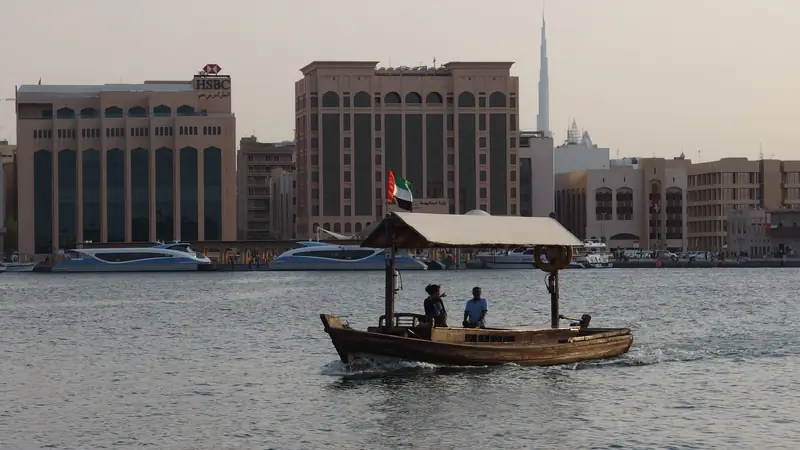
One of the best bargains in town is the abra, the wooden boat that crosses Dubai Creek: the RTA charges AED 2 on the regular routes. For a private ride, the electric abra costs AED 60 for 30 minutes or AED 120 for 60 minutes, per boat, for up to 8 people. Between Dubai and Abu Dhabi, options range from the intercity bus to a car with a driver; going private costs more but turns the motorway into part of the day out, with stops wherever you like.
| Product (RTA) | 1 zone | 2 adjacent zones | More than 2 zones |
|---|---|---|---|
| nol Silver | AED 3 | AED 5 | AED 7.50 |
| nol Gold | AED 6 | AED 10 | AED 15 |
| Regular Red Ticket | AED 4 | AED 6 | AED 8.50 |
Attractions: official prices to benchmark against
Tickets for the headline attractions are the third block of the budget, and one simple rule applies: use the official website as your benchmark and be wary of prices far below it. Costs vary with ticket type, the levels or areas included and the season, and the most popular slots sell out first. The table brings together prices published by official sources: the Dubai Frame's own website, Visit Dubai for At the Top and The View at The Palm, and the RTA for the abra.
What balances the bill is that a great deal of Dubai and Abu Dhabi costs nothing. The Dubai Marina and JBR promenade is free, the Al Fahidi historic quarter rewards an unhurried wander, and in Abu Dhabi the official tourism portal confirms that access to Yas Island is free; it is the theme parks on the island that charge admission. Pairing one paid attraction with one free activity each day is the smartest way to keep the itinerary rich and the budget in check.
| Attraction | Published price | Source |
|---|---|---|
| Burj Khalifa, At the Top | From AED 159 | Visit Dubai |
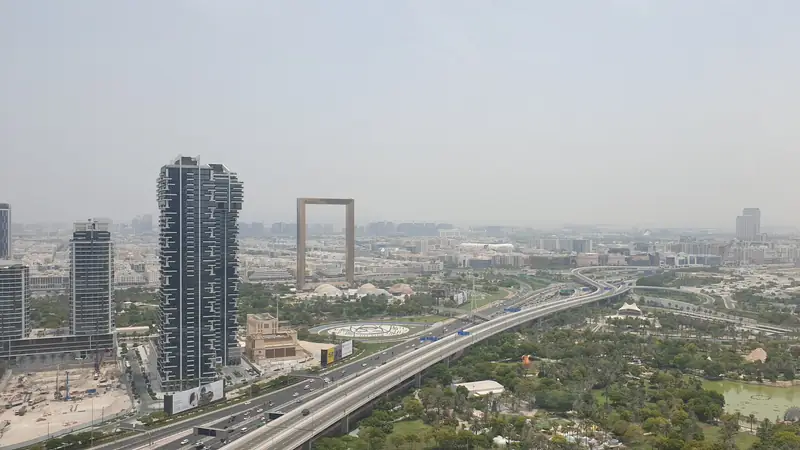
| Dubai Frame, adult | AED 50 | Dubai Frame official website |
| Dubai Frame, child aged 3 to 12 | AED 20 (under-3s free) | Dubai Frame official website |
| The View at The Palm, adult | From AED 100 | Visit Dubai |
| The View at The Palm, child | From AED 69 (under-4s free) | Visit Dubai |
| Dubai Creek abra, regular routes | AED 2 | RTA |
Food: from neighbourhood canteens to hotel brunch
Eating in Dubai can be surprisingly affordable or spectacularly expensive, and the difference comes down to choices. Neighbourhood restaurants in Karama, Deira and Bur Dubai serve excellent Indian, Pakistani, Lebanese and Iranian food for a fraction of hotel prices, and mall food courts handle a quick lunch between sights perfectly well.
At the other end are chef-led restaurants inside hotels and the famous Friday or Saturday brunch, a local institution with a lavish buffet and, in many cases, drinks packages. Alcohol is the single item that inflates the bill most: it is served only in licensed venues, usually inside hotels, and it is priced accordingly. If you drink little or not at all, you will feel the difference by the end of the trip.
A good approach is one special meal a day with the others kept simple. Breakfast included in the room rate goes a long way, and bottled water from a supermarket costs far less than from the minibar.
Tours and experiences: where it pays to spend
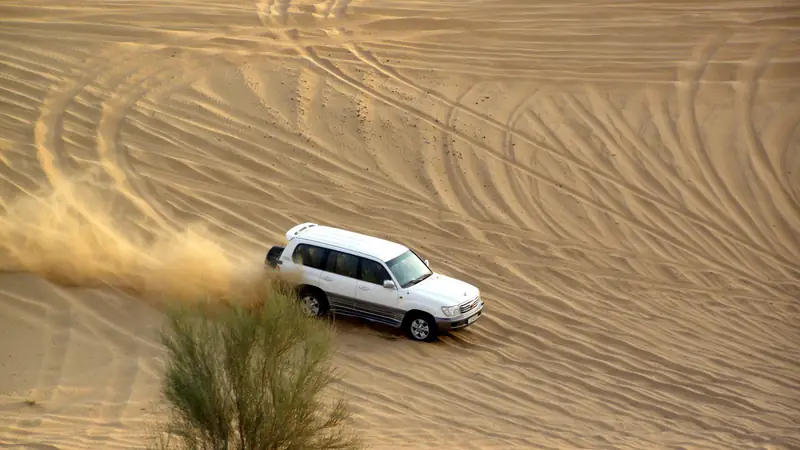
Tours are the most flexible part of the budget. A desert safari can be done in a large group in a shared vehicle or as a private trip with an exclusive dinner; both deliver dunes and a sunset, but the experience is completely different. The same is true of the Abu Dhabi day trip, boat outings in the Marina and scenic flights.
Price almost always comes down to exclusivity, duration and vehicle. A private tour with a driver costs more per head for a couple, but for families or groups of four to six the gap per person narrows considerably and the gain in comfort and flexibility is significant. It is worth going private where it makes a real difference: on the Abu Dhabi day, which involves a motorway drive and several stops, and in the desert, where the quality of the operator changes everything.
For the rest, metro, taxis and tickets bought on official sites work very well. If you are still weighing up the two cities to decide where to spend more nights, our post on Dubai or Abu Dhabi will help you balance the itinerary.
Money-saving tips from people who live here
Saving money in Dubai does not mean giving up comfort. It means spending where the experience genuinely improves and trimming where nobody notices. These are the tips we give friends who come to stay.
- Avoid December and January if you can: November, February and March keep the good weather with less pressure on rates, and summer is unbeatable for hotel prices.
- Choose a hotel near a metro station if your plans are mostly in the city; the taxi savings add up quickly.
- Buy a nol card as soon as you land and top it up as you go.
- Buy tickets directly on official websites, well ahead for the most popular time slots.
- Mix paid attractions with free ones: public beaches, promenades, souqs and historic districts.
- Have lunch in neighbourhood restaurants and keep the bigger budget for one memorable dinner or brunch.
- Always ask for the hotel's all-in price including fees and read the cancellation policy before paying.
- Use your card for most things but keep a little cash for souqs, abras and tips.
Budget, comfort or luxury: what each type of traveller usually books
Rather than promise a total that would depend on dates, exchange rates and personal taste, we prefer to show what each type of traveller typically books. That way you can see where you fit and ask for quotes that are genuinely comparable. Most of our guests mix profiles anyway: a comfortable hotel, private transport on the long days and one or two well-chosen luxury experiences.
| Profile | Accommodation | Getting around | Experiences | Meals |
|---|---|---|---|---|
| Budget | Well-located hotel near the metro in Deira, Bur Dubai or Al Barsha | Metro, tram, abra and the occasional taxi | Headline attractions at quieter times and plenty of free activities | Neighbourhood restaurants and food courts |
| Comfort | Four- or five-star hotel in Downtown, the Marina or on the beach | Taxis and ride apps, with a private driver for the Abu Dhabi day | Burj Khalifa at sunset, a desert safari and a boat trip | A mix of local restaurants and one or two special dinners |
| Luxury | Palm Jumeirah resort, iconic hotel or a suite in Abu Dhabi | Private driver and guide throughout | Private experiences, desert dining, yacht charter and scenic flights | Chef-led restaurants and hotel brunches |
How High Class helps you shape the budget
The most reliable way to know what your trip will cost is to build the itinerary before looking at the total. With dates, the number of travellers and the style you are after, it becomes clear where to invest and where to keep things simple. That is exactly what the High Class local team does: on WhatsApp, Huda gets to know your priorities, suggests the mix of hotel, private driver, guide and experiences that makes sense and sets out the alternatives clearly, without pushing anything you do not need.
If you would like a ready-made base to adapt, the six-night Dubai and Abu Dhabi itinerary shows how to split the days between the two cities. From there, we tune the level of comfort to your budget.
If you are travelling from the UK, the US or India
- United Kingdom
- The UAE dirham is pegged to the US dollar, so what you pay in pounds follows the sterling to dollar rate. Cards are accepted almost everywhere, including taxis, but check your bank's foreign transaction fees and, when a card machine offers to charge you in pounds, choose dirhams instead to avoid a poor conversion rate. February half-term, Easter and the Christmas holidays are when British families head to the Gulf, and December overlaps with Dubai's peak pricing. November and late spring often give a better balance of weather and value. Check entry rules for your passport on u.ae, icp.gov.ae and gdrfad.gov.ae before booking.
- United States
- Because the dirham is pegged to the US dollar, American travellers get unusually predictable prices: what you see in dirhams converts at a stable rate throughout your trip. Many US cards charge foreign transaction fees, so travel with one that does not, and always pay in dirhams rather than accepting conversion to dollars at the terminal. Thanksgiving, the Christmas break and spring break are the busiest times to fly, and the winter weeks coincide with Dubai's highest hotel rates. Check entry requirements for your passport on u.ae, icp.gov.ae and gdrfad.gov.ae before you travel.
- India
- For Indian travellers, the short flight keeps airfare a smaller share of the total, which leaves more room for hotel and experiences. A multi-currency forex card or an international card with low markup avoids the worst conversion costs, and paying in dirhams rather than rupees at the terminal is usually better value. Diwali, the Christmas and New Year week and the May and June school holidays bring heavy demand on India to UAE routes, so book early for those dates. Visa on arrival applies only to Indian passport holders with a valid visa or residence permit from the US, the UK, the EU or another country on the UAE government's list; otherwise you need a pre-arranged e-visa. Confirm on u.ae, icp.gov.ae and gdrfad.gov.ae.
Frequently asked questions
How much does a trip to Dubai cost?
It depends mainly on the season, the hotel and the style of touring. Flights and accommodation make up most of the cost and vary widely: December and January are the most expensive months. For a realistic estimate, build the itinerary first and ask for quotes with fixed dates.
Is Dubai expensive for tourists?
It can be, but it does not have to be. Public transport is cheap (a one-zone metro journey costs AED 3 with a nol Silver card, according to the RTA), many activities are free and neighbourhood restaurants are excellent value. What pushes costs up is a hotel in peak season, alcohol and private experiences.
How much is a Burj Khalifa ticket?
According to Visit Dubai, At the Top tickets start from AED 159. The price changes with the levels included, such as the level 148 observation deck; buy through the official channel and in advance.
How much is a taxi in Dubai?
For a street-hailed taxi, the RTA lists a starting fare of AED 5 by day and AED 5.50 at night, AED 2.19 per kilometre and a minimum fare of AED 12. Booked via an authorised app, the starting fare is AED 9 to AED 13, with a minimum of AED 13.
When is the cheapest time to visit Dubai?
Summer, from June to September, usually has the lowest hotel rates because of the intense heat. December and January are the most expensive. November, February and March balance pleasant weather with less pressure on prices than the festive season.
Do Dubai hotels charge extra fees?
Yes. On top of the room rate, there is a per-night municipality and tourism fee, usually paid at the hotel. Always ask for the all-in price before comparing offers.
Should I take cash or use a card in Dubai?
Cards are accepted almost everywhere, including taxis. Carry a little cash for souqs, tips and small purchases, and check your card's foreign transaction fees before you travel.
Official sources consulted (8)
- RTA, nol Fares. https://www.rta.ae/wps/portal/rta/ae/public-transport/Nol-Fares Consulted on .
- RTA, Taxi Fare in Dubai. https://www.rta.ae/wps/portal/rta/ae/home/promotion/taxi-fare Consulted on .
- RTA, Dubai Creek abra. https://www.rta.ae/wps/portal/rta/ae/home/promotion/dubai-creek-abra Consulted on .
- Dubai Frame, Plan your visit. https://www.dubaiframe.ae/en/plan-your-visit Consulted on .
- Visit Dubai, Burj Khalifa. https://www.visitdubai.com/en/places-to-visit/burj-khalifa Consulted on .
- Visit Dubai, The View at The Palm. https://www.visitdubai.com/en/places-to-visit/the-view-at-the-palm Consulted on .
- Visit Abu Dhabi, Yas Island. https://visitabudhabi.ae/en/where-to-go/islands/yas-island Consulted on .
- At the Top Burj Khalifa, Frequently asked questions. https://ticket.atthetop.ae/frequently-asked-questions/ Consulted on .